 Dr. Vaishali Suri (P.T.)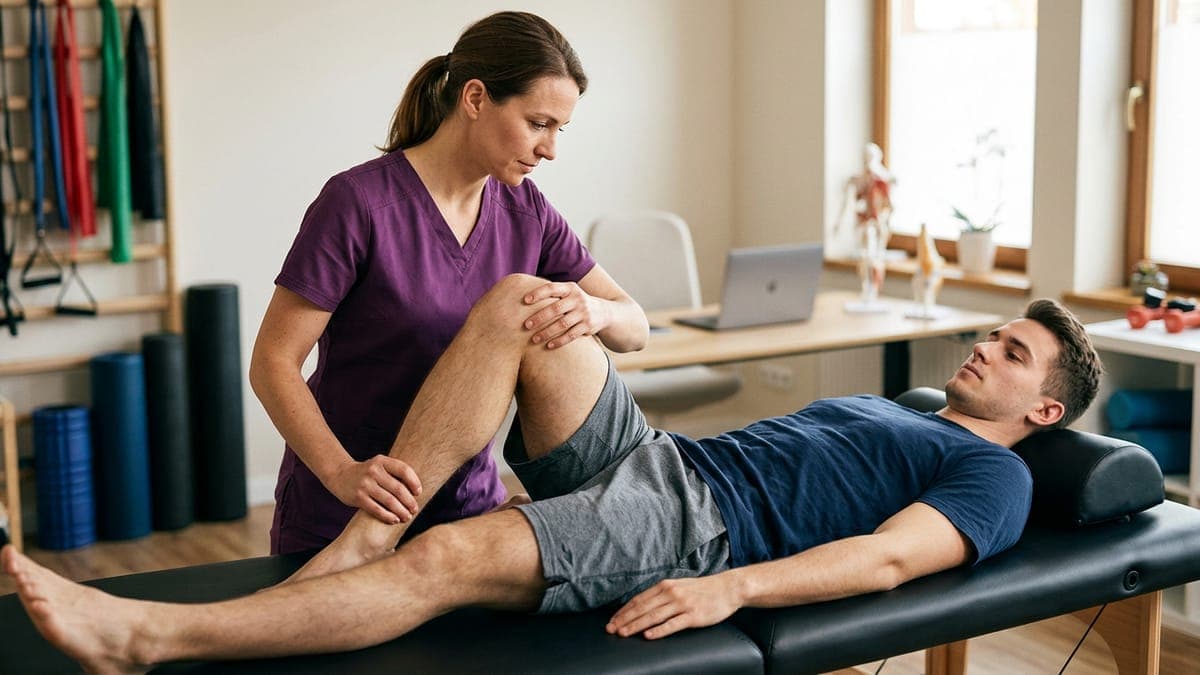
Hip Labral Tear: Physiotherapy Treatment in Faridabad
A hip labral tear involves damage to the cartilaginous ring (labrum) that lines the hip socket and provides stability and shock absorption for the joint. It causes anterior hip and groin pain, clicking, and reduced hip function — particularly in athletic individuals and those with femoroacetabular impingement (FAI).
Expert physiotherapy can restore function and often avoid the need for hip arthroscopy surgery.
At Realign Rehab Clinic , NIT-5, Faridabad, our expert physiotherapist Dr. Vaishali Suri provides evidence-based treatment designed for your specific needs.
We serve patients from NIT, Sector 14, Old Faridabad, Green Field Colony, Ballabhgarh, Surajkund, and surrounding areas.
Causes and Risk Factors
- Femoroacetabular impingement (FAI) — bony abnormality creating mechanical impingement of the labrum
- Twisting or pivoting injuries in sport — football, hockey, martial arts, dance
- Repetitive hip flexion activities — cycling, running, football kicking
- Hip joint hypermobility allowing excessive movement stressing the labrum
- Degenerative labral tearing associated with hip osteoarthritis
- Structural abnormalities — dysplastic hip, acetabular retroversion
Signs and Symptoms
- Deep anterior hip or groin pain, particularly with hip flexion and rotation
- Clicking, catching, or locking sensation in the hip joint
- Pain sitting for prolonged periods, particularly in low chairs or car seats
- Stiffness and restricted hip internal rotation
- Reduced tolerance for running, squatting, or lunging activities
- A positive FADIR test — pain with flexion, adduction, and internal rotation of the hip
Physiotherapy Treatment at Realign Rehab, Faridabad
- Hip joint mobilisation to improve range of motion and reduce impingement
- Deep hip external rotator and gluteal strengthening to unload the labrum
- Core and lumbopelvic stability training to reduce hip joint stress
- Movement retraining — hip-hinge patterns, squatting and running mechanics
- Activity modification to avoid provocative positions during healing
- Return-to-sport protocol with gradual loading progression
Frequently Asked Questions
Do I need surgery for a hip labral tear?
Not necessarily. Physiotherapy is the first-line treatment for most hip labral tears and achieves results comparable to hip arthroscopy for mild-to-moderate tears. Surgery is considered when conservative management fails after 3–6 months.
Will the labrum heal on its own?
Labral tissue has limited blood supply and does not fully self-repair. However, physiotherapy reduces stress on the torn labrum, strengthens supporting muscles, and allows functional recovery without requiring the labrum to fully heal.
How long does recovery take?
Conservative physiotherapy: 3–6 months for real functional improvement. Athletes returning to sport typically need 4–6 months of structured rehabilitation. Post-surgical rehabilitation after hip arthroscopy: 4–6 months.
Is this the same as hip impingement (FAI)?
FAI (femoroacetabular impingement) is the mechanical cause that often leads to labral tears. They frequently coexist and are treated together with a combined physiotherapy programme addressing both the impingement and labral damage.
Book Your Consultation
Ready to get back to pain-free living? Contact Realign Rehab Clinic today.
📍 NIT-5, Faridabad (near Green Field Colony, Sector 15)
📞 +91 9818185589
🕑 Monday–Saturday: 9 AM–7 PM
Related Articles: Snapping Hip Syndrome (Coxa Saltans) Treatment in Faridabad: Physiotherapy | Hip Replacement Home Physiotherapy in Faridabad: Recovery at Home | Hip Pain in Elderly Adults in Faridabad: Physiotherapy Treatment | Hip Impingement (FAI) Physiotherapy in Faridabad: Conservative Treatment
Related Conditions: Wrist Pain Treatment | Urinary Incontinence Treatment | Tennis Elbow Treatment
Related Services: Advanced Sports Physiotherapy | Pediatric Physio