
 Dr. Vaishali Suri (P.T.)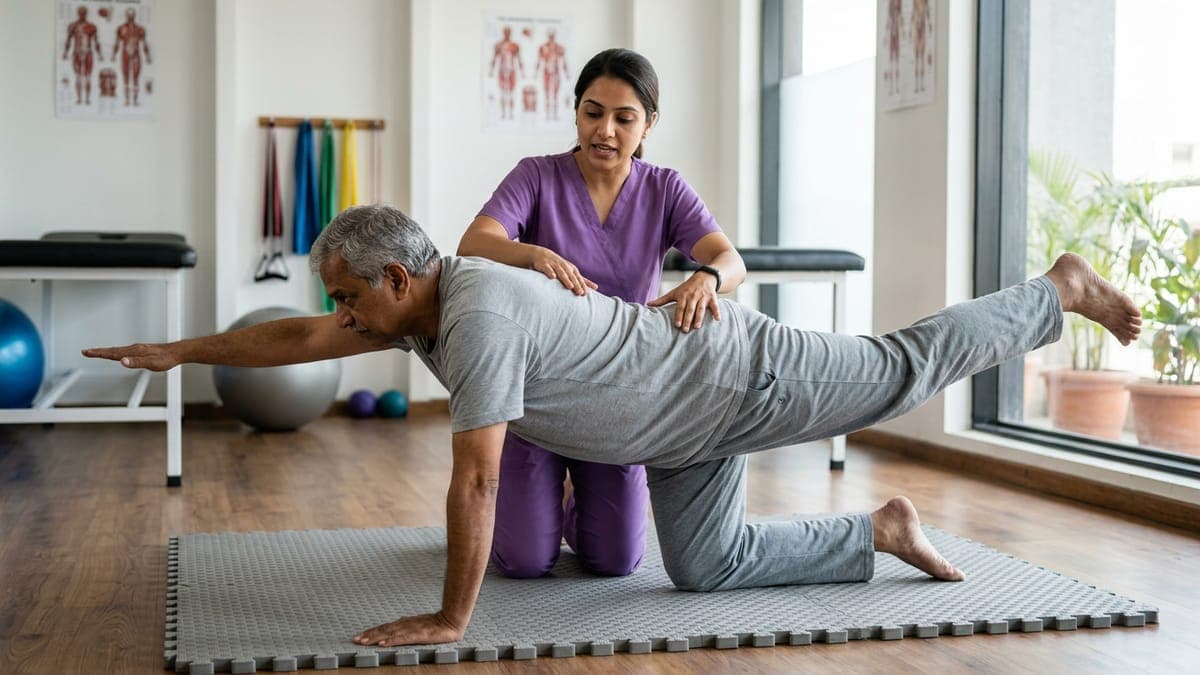
Spondylolisthesis: Physiotherapy Treatment in Faridabad
Spondylolisthesis is a condition where one vertebra slips forward over the vertebra below it, most commonly at L4–L5 or L5–S1. It causes chronic low back pain, stiffness, and sometimes leg pain (sciatica) from nerve root compression.
While Grade 3–4 slips may require surgical consideration, the vast majority of spondylolisthesis cases — particularly Grade 1 and 2 — respond excellently to physiotherapy.
At Realign Rehab Clinic , NIT-5, Faridabad, our expert physiotherapist Dr. Vaishali Suri provides evidence-based treatment suited to your specific needs.
We serve patients from NIT, Sector 14, Old Faridabad, Green Field Colony, Ballabhgarh, Surajkund, and surrounding areas.
Causes and Risk Factors
- Isthmic spondylolisthesis — stress fracture of the pars interarticularis, common in young gymnasts, fast bowlers, and weightlifters
- Degenerative spondylolisthesis — disc and facet joint degeneration allowing vertebral slippage (most common type, affects adults over 50)
- Dysplastic spondylolisthesis — congenital abnormality of the posterior facets
- Traumatic — acute fracture causing vertebral displacement
- High-impact sports with repeated lumbar hyperextension: gymnastics, fast bowling, diving
Signs and Symptoms
- Chronic low back pain worsened by standing, walking, and lumbar extension
- Buttock and leg pain from nerve root compression (sciatica-type symptoms)
- Hamstring tightness — very characteristic of isthmic spondylolisthesis
- Spinal stiffness in the morning that eases with gentle movement
- Waddling gait in severe cases from muscle compensation patterns
- Pain relieved by lumbar flexion (leaning forward or sitting)
Physiotherapy Treatment at Realign Rehab, Faridabad
- Core stability programme — deep stabiliser activation to control the unstable spinal segment
- Neural mobilisation to reduce sciatic nerve tension from the slipped segment
- Hamstring flexibility training — key component in isthmic spondylolisthesis management
- Lumbar flexion exercises and postures to decompress the posterior elements
- Postural education and activity modification to avoid hyperextension provocations
- Graded return to sport and physical activity within safe biomechanical parameters
Frequently Asked Questions
Do I need surgery for spondylolisthesis?
Grade 1 and Grade 2 slips (the vast majority) rarely need surgery. Structured physiotherapy — particularly core stability training — produces excellent outcomes equivalent to surgery in most cases.
Surgery is considered for Grade 3–4 slips or progressive neurological symptoms.
Can I exercise with spondylolisthesis?
Yes — carefully selected exercises are the foundation of treatment. We avoid lumbar hyperextension exercises and design a programme that stabilises the affected segment while maintaining overall fitness.
Will spondylolisthesis get worse over time?
Most cases of Grade 1–2 spondylolisthesis are stable and do not progress, especially with physiotherapy. Degenerative spondylolisthesis can progress slowly over decades but rarely requires surgery if managed appropriately.
Can young athletes return to cricket or gymnastics?
Yes — the majority of young athletes with isthmic spondylolisthesis can return to their sport with correct rehabilitation, technique modification, and a maintenance exercise programme. This is one of our specialties at Realign Rehab.
Book Your Consultation
Ready to get back to pain-free living? Contact Realign Rehab Clinic today.
📍 NIT-5, Faridabad (near Green Field Colony, Sector 15)
📞 +91 9818185589
🕑 Monday–Saturday: 9 AM–7 PM
Related Articles: Yoga Injury Treatment in Faridabad: Physiotherapy for Yoga-Related Pain | Wrist Tendinopathy: Physiotherapy Treatment in Faridabad | Wrist Fracture Rehabilitation in Faridabad: Recovery After Colles Fracture | Workplace Ergonomics and Physiotherapy in Faridabad for Office Workers
Related Conditions: Wrist Pain Treatment | Urinary Incontinence Treatment | Tennis Elbow Treatment
Related Services: Wrist & Hand Therapy | Taping & Bracing